What To Do After Buying a New Pigeon: A Complete Quarantine Guide
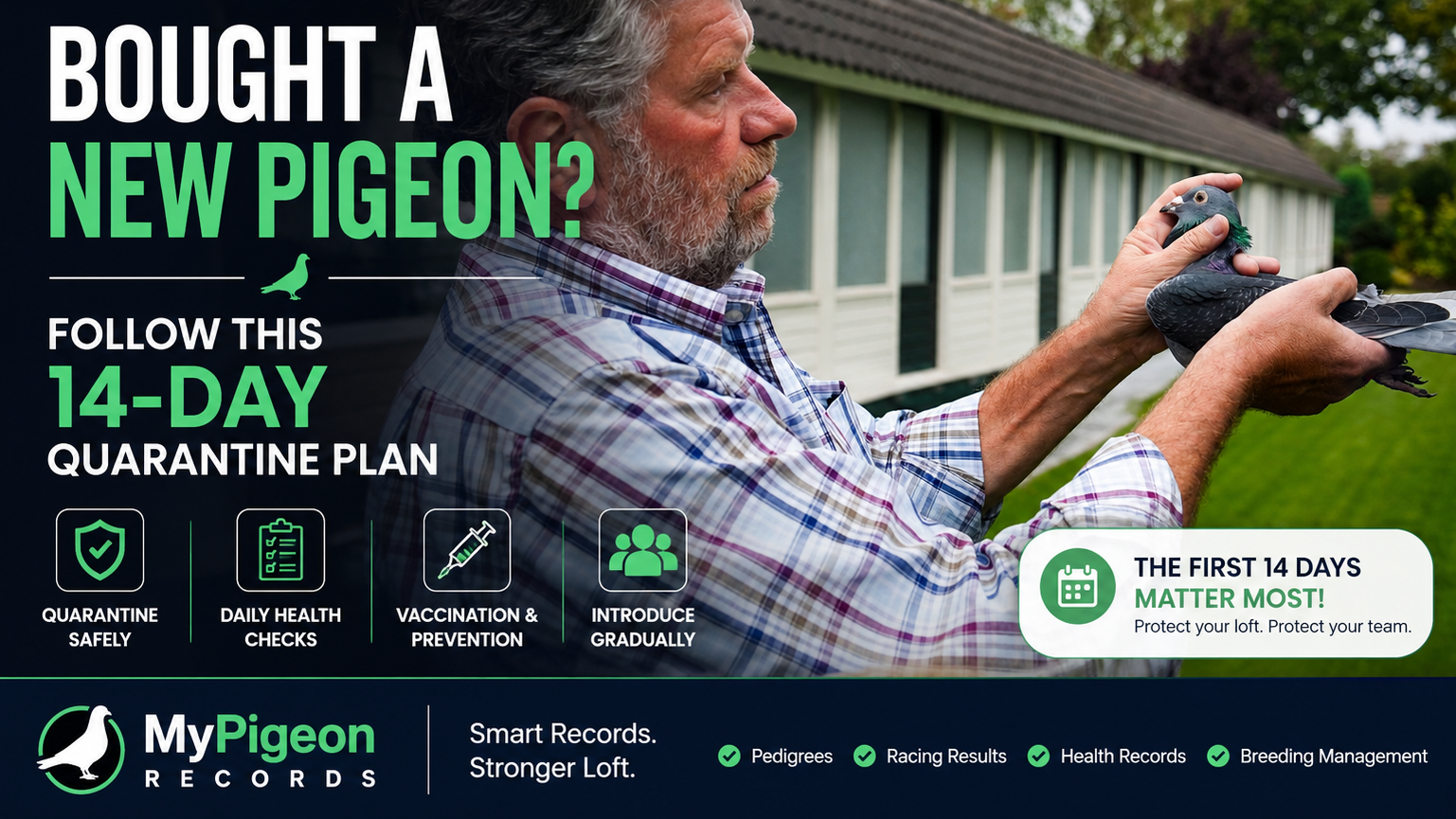
Purchasing a new pigeon is always exciting, whether it's a promising racer, a proven breeder, or a young bird with exceptional bloodlines. However, the period immediately after arrival is one of the most important stages in ensuring your new bird remains healthy and adapts successfully to its new environment.
Transport, handling, and relocation create significant stress for pigeons. Even healthy birds can become vulnerable to illness during this adjustment period. A proper quarantine and care routine helps protect both your new pigeon and the birds already living in your loft.

Here's a practical step-by-step guide every pigeon fancier should follow.
Step 1: Quarantine New Arrivals
The first rule is simple: never place newly purchased pigeons directly into your main loft.
Set up a separate cage, aviary, or quarantine section where the new bird can stay for at least:
- 14 days minimum
- 21–30 days preferred for maximum safety
This isolation period helps prevent the introduction of:
- Respiratory infections
- Paratyphoid
- Canker
- Worms
- External parasites
- Other contagious diseases
Even if the pigeon appears healthy, some illnesses can remain hidden for days or weeks.
Step 2: Help Them Recover From Transport Stress
Long-distance transport places tremendous stress on pigeons.
During the first 48 hours:
- Provide fresh, clean drinking water
- Add electrolytes if available
- Offer a quality grain mixture
- Ensure grit and minerals are always accessible
- Avoid excessive handling
The goal is to allow the bird to rest and recover.
Step 3: Monitor Health Daily
During quarantine, spend a few minutes each day observing the pigeon.
Watch for signs such as:
- Watery droppings
- Sneezing
- Labored breathing
- Weight loss
- Loss of appetite
- Excessive thirst
- Lethargy
Healthy pigeons should remain alert, active, and eager to eat.
Any unusual symptoms should be investigated promptly.
Step 4: Maintain Excellent Loft Hygiene
A clean environment significantly reduces disease risk.
During quarantine:
- Clean drinkers daily
- Replace water every day
- Remove droppings regularly
- Keep feed containers clean
- Ensure adequate ventilation
Good hygiene is often the best medicine.
Step 5: Review Vaccination Status
Before introducing new pigeons to your loft, verify their vaccination history.
Most pigeon fanciers recommend vaccination against:
- Paramyxovirus (PMV)
If vaccination status is unknown, consult a qualified avian veterinarian regarding the best timing for vaccination.
Step 6: Consider Preventive Health Treatments
Many experienced breeders perform health checks or treatments before mixing new birds with their existing loft.
Common areas of concern include:
- Canker
- Paratyphoid
- Worms
- External parasites
Treatment decisions should always be based on your loft management program and veterinary guidance.
Step 7: Support the Immune System Naturally
Stress weakens a pigeon's immune system.
Many fanciers support recovery by providing:
- Brewer's yeast
- Garlic oil
- Linseed oil
- Mineral supplements
- Fresh bath water
- Access to fresh air and sunlight
These simple measures can help birds settle into their new environment more comfortably.
Step 8: Introduce New Birds Gradually
After the quarantine period is complete and the pigeon shows no signs of illness, introductions can begin.
A gradual approach works best:
- Allow visual contact first.
- Place birds in adjacent sections.
- Monitor behavior closely.
- Introduce them to the main loft under supervision.
Avoid rushing the process, especially with valuable breeding or racing pigeons.
Special Care for Young Pigeons
Young pigeons often experience greater stress after transportation and relocation.
For pigeons under one year of age:
- Extend quarantine if possible
- Monitor weight regularly
- Ensure adequate nutrition
- Minimize unnecessary handling
- Watch carefully for signs of illness
Young birds typically require additional time to adapt.
Final Thoughts
A newly purchased pigeon may look healthy on arrival, but transportation stress and exposure to unfamiliar environments can temporarily weaken its defenses.
A careful quarantine period, proper nutrition, good hygiene, and close observation dramatically reduce the risk of introducing disease into your loft and give your new bird the best chance to thrive.
A little patience during the first few weeks can save months of problems later and help protect the health of your entire pigeon team.